

The Material War: Who Is the King of Office Seating in 2026?
When choosing an ergonomic office chair, the material is often more important than the aesthetic. With the breakthroughs in material science in 2026, all-mesh seating is no longer just about "keeping cool"—it has become a precision-engineered physiological tool.

1. Thermal Balance: Heat Dissipation vs. Heat Trapping
-
All-Mesh (ElastoMesh): Features an open physical structure. Studies show that after 4 hours of continuous work, the back temperature of an all-mesh chair is 3.5°C lower than that of a leather chair. This passive cooling prevents back perspiration and reduces skin discomfort.
-
Traditional Materials: Whether genuine leather or synthetic, these materials create "heat traps" between the body and the chair, slowing down blood circulation and increasing fatigue.

2. Dynamic Support: Biomechanical Feedback
Our Professional Executive Mesh Ergonomic Chair utilizes ElastoMesh technology with "Adaptive Tension."
-
The Mesh Advantage: When you shift your posture, the mesh redistributes tension according to skeletal pressure points, providing a "suspension-like" support system.
-
The Foam Limitation: Foam cushions eventually suffer from irreversible collapse, leading to direct pressure on the tailbone—a primary cause of lower back pain.
3. Durability and Maintenance
In 2026, sustainability is a core metric. Due to its high-rebound fibers, All-Mesh has an anti-fatigue lifespan 3 times longer than high-density foam. Furthermore, mesh is incredibly easy to clean and does not accumulate dust mites or odors like fabric and leather.
Final Verdict If you are seeking the ultimate in breathability and scientific skeletal protection—especially during deep creative sessions or high-intensity programming—an ergonomic office chair with ElastoMesh technology is the undisputed choice for 2026.
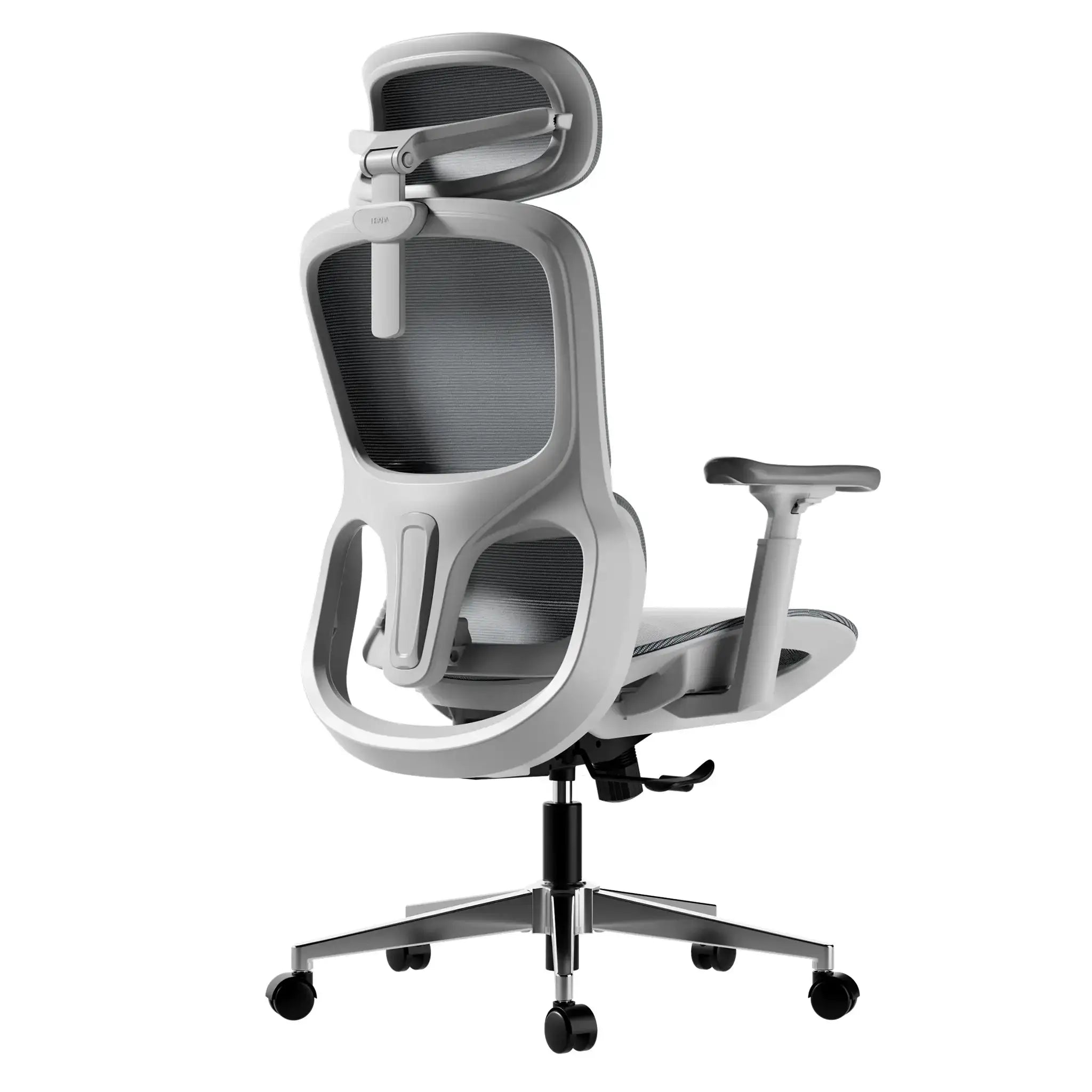
Upgrade Your Comfort:
👉 Experience the Cooling Comfort: Professional Executive Mesh Ergonomic Chair
2026 Trends: A Productivity Revolution Beyond "Comfort"
"My Chair Was Killing My Career": An Architect’s Journey to Spine Recovery
Related Posts

Acoustic Symmetry and Spinal Alignment: Tuning My Workspace for Peak Creative Flow

The Open-Source Posture: Solving the Hidden Thermal and Lumbar Glitches of WFH Seating

Brushing Away the Ache: How My Studio Seating Saved My Posture and My Art

Beyond the Blueprint: A Designer’s Guide to Seat Tension and Creative Endurance

Breaking the Slouch: A First-Person Chronicle of Lower Back Recovery and Creative Stamina

Beyond the Hype: What a Truly Adaptive Workspace Taught Me About Creative Burnout

The Inoculation Asset: Evaluating Corporate Seating Infrastructure Through the Lens of Liability Mitigation


