

Acoustic Symmetry and Spinal Alignment: Tuning My Workspace for Peak Creative Flow
Tuning the Workspace: When Physical Strain Distorts Creative Focus
In the world of high-end audio mastering, success is determined by the elimination of unwanted noise. We spend a fortune on custom acoustic paneling, floating floor grids, and ultra-linear reference monitors just to ensure that what we hear is perfectly transparent. Every single frequency must be perfectly balanced, and every transient wave must be cleanly defined. Yet, for years, I allowed a massive, glaring source of distortion to remain right in the middle of my mixing sweet spot: my seat.
I was working from a heavy, thickly padded traditional leather task chair that felt soft for the first twenty minutes but offered zero structural discipline under long system loads.
By late afternoon, during critical sessions when my ears needed to be at their absolute sharpest, my body would run into a severe performance bottleneck. A sharp, burning ache would lock up my neck, and a compressed, throbbing pressure would spread across my lower pelvic area.
When your lower spine is screaming in pain, your brain cannot maintain the calm, hyper-focused state required to detect subtle micro-decibel adjustments. It became undeniably clear that securing an exceptional office chair ergonomic asset wasn’t about buying premium luxury furniture—it was a technical necessity to safeguard my professional physical endurance.

The True Architecture of Static Support
An elite tool should never demand your conscious attention. If you are constantly forcing yourself to adjust your posture, sliding forward to escape a hard backrest, or placing custom foam pillows behind your lumbar region just to stay upright, your environment is broken.
When you are deep in the zone blending complex orchestral layers, your physical chair should operate silently as a responsive extension of your skeleton.
This is exactly why dense, foam-filled corporate chairs are structurally wrong for intensive, deep-work lifestyles. Traditional padding seals your body into a fixed position, trapping kinetic energy and forcing your lower back muscles to stay permanently contracted just to balance your frame. True physical recovery demands a good ergonomic office chair that redistributes your mass evenly across an advanced elastomeric suspension mesh, taking the load completely off your skeleton and letting you move with fluid freedom.

Banish the Micro-Climate of Thermal Fatigue
Working under massive dual-display setups and warm studio gear means that heat dissipation is a constant battle. Standard leather or vinyl chairs act like thermal mirrors, reflecting your natural body heat right back at you. This creates a humid, uncomfortable micro-climate that triggers physical restlessness, making you feel foggy and mentally drained during intense afternoon tracking sessions.
You find yourself taking breaks not because your mind is tired, but because your body is seeking airflow.
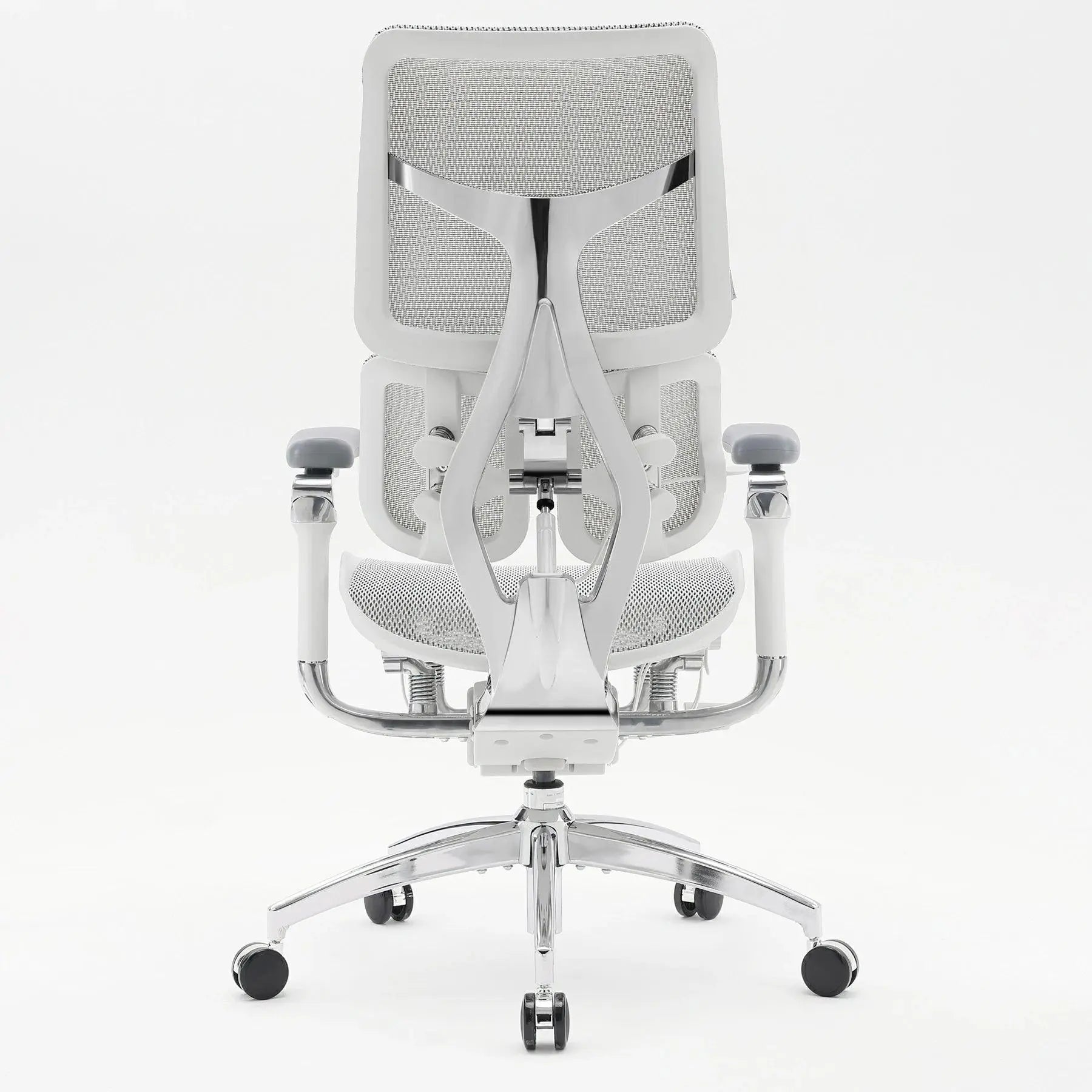
Upgrading my production room layout to the Gravity-Defying Ergonomic Mesh Office Chair completely fixed this hidden system bottleneck. By swapping out dense padding for an elite, multi-directional woven mesh grid, the chair allows constant air circulation across every single square inch of body contact. It effectively flushes away moisture and thermal buildup, keeping your mind crisp, sharp, and perfectly locked onto your wave edits from the morning setup to the final midnight export.

The Framework of Professional Longevity
Integrating this precise architectural piece of equipment into my daily production workflow has completely altered my physical stamina metrics at the mixing desk. The foundation of this incredible comfort is the specialized High-Tenacity Elastomeric Polymer Grid. Rather than compressing your tailbone against an unyielding base plate, the flexible mesh suspends your full frame with absolute precision, dissolving localized lower-back tension points.
The dynamic responsiveness of the frame is incredibly fluid. When I lean far forward to tweak a delicate outboard analog compressor or recline back to audit a full master track, the integrated Reactive Mechanical S-Curve Spine Bridge tracks my lower vertebrae automatically, delivering custom-tailored lumbar support without any manual latch adjustments.
Combined with an extraordinary 94% Airflow Convection Flux Rate that continuously disperses ambient heat, this design has eliminated all physical friction from my workspace, proving that masterclass material execution is the ultimate key to professional performance.
👉 CLICK HERE TO RE-TUNE YOUR WORKSPACE ENVIRONMENT WITH THE DEFINITIVE ERGONOMIC EXPERIENCE.
Ähnliche Beiträge

The Open-Source Posture: Solving the Hidden Thermal and Lumbar Glitches of WFH Seating

Brushing Away the Ache: How My Studio Seating Saved My Posture and My Art

Beyond the Blueprint: A Designer’s Guide to Seat Tension and Creative Endurance

Breaking the Slouch: A First-Person Chronicle of Lower Back Recovery and Creative Stamina

Beyond the Hype: What a Truly Adaptive Workspace Taught Me About Creative Burnout

The Inoculation Asset: Evaluating Corporate Seating Infrastructure Through the Lens of Liability Mitigation
