

The Open-Source Posture: Solving the Hidden Thermal and Lumbar Glitches of WFH Seating
The Glitch in My Lumbar: When Code Runs Smoothly But Your Body Crashes
In software development, we treat optimization as an ongoing battle against friction. We invest in high-refresh-rate monitors to save eye strain, mechanical keyboards with specific tactile responses to protect our wrists, and ultra-fast processors to shave seconds off compilation times. Yet, for the first three years of my independent remote career, I left a massive, gaping vulnerability in my physical runtime environment: my chair.
I was sitting on a thick, heavily cushioned executive leather seat that looked premium but performed terribly under continuous system loads.
By 2 PM every single afternoon, right when I was deep into tracing a memory leak or refactoring a database schema, my body would run into a critical performance bottleneck. My lower back would lock up, and a persistent, numbing pressure would radiate across my thighs.
It turns out that sitting on traditional foam padding for ten hours straight is the ergonomic equivalent of running an unoptimized loop—it slowly but surely drains your systemic energy until your entire mental focus crashes. That was the moment I stopped looking for temporary foam wedges and decided to install a highly reactive, structurally stable mesh office chair to restore my physical posture.

The Thermal Cost of Heavy Padding
As a programmer, I understand that heat is the ultimate enemy of long-term hardware reliability. The exact same principle applies directly to the human body. Traditional foam and leather chairs are essentially thermal insulators; they trap your natural body heat and lock it inside the seat cushion, creating an incredibly warm, humid micro-climate against your back and legs.
You don’t realize how much cognitive processing power your brain wastes on physical restlessness until you fix the ventilation problem.
When you feel sticky, overheated, and physically uncomfortable, you find yourself constantly shifting your weight, cross-checking your posture, or standing up to pace around the room simply to find cool air. Every single one of those movements is a context switch that breaks your deep mental focus. Transitioning to a high-performance good ergonomic office chair completely flushes this invisible friction out of your system, ensuring that your core body temperature stays perfectly regulated while you remain locked into your terminal.

The Pure Efficiency of Woven Material Suspension
The real breakthrough came when I understood the physics behind proper skeletal suspension. When you sit on a standard foam surface, your pelvic bones eventually bottom out against the hard wooden or plastic plate underneath, causing specific, highly localized pressure spikes.
A well-engineered grid suspension, however, treats your body mass as a distributed load.
This is exactly why the integration of the Gravity-Defying Ergonomic Mesh Office Chair felt like a major system upgrade for my workspace. The advanced mesh surface acts as a responsive spring network, dynamically mapping your individual contours and neutralizing pressure before it can translate into muscular exhaustion. It provides a weightless, floating sensation that completely detaches you from the physical reality of sitting at a desk for hours on end.

Optimizing My Physical Runtime for Deep Work Blocks
Incorporating this precise mesh hardware into my home office ecosystem has completely rewritten my physical resilience metrics during long deployment cycles. The magic of this unit centers around its custom-engineered High-Tenacity Elastomeric Polymer Grid. Instead of fighting against an unyielding cushion, your entire frame is perfectly balanced across an ultra-durable elastic matrix that instantly dampens localized micro-stress.
The reactive tracking of the system is flawless. Whenever I lean forward to scan a dense server log or recline backward to brainstorm an architectural layout, the built-in Reactive Mechanical S-Curve Spine Bridge moves instantly along with my lower back, providing constant, automatic alignment without requiring me to stop and adjust manual mechanical locks.
Supported by a phenomenal 94% Airflow Convection Flux Rate that continuously disperses ambient thermal energy, this equipment has removed all physical friction from my daily engineering grind, proving that proper material execution is the true secret to long-term professional endurance.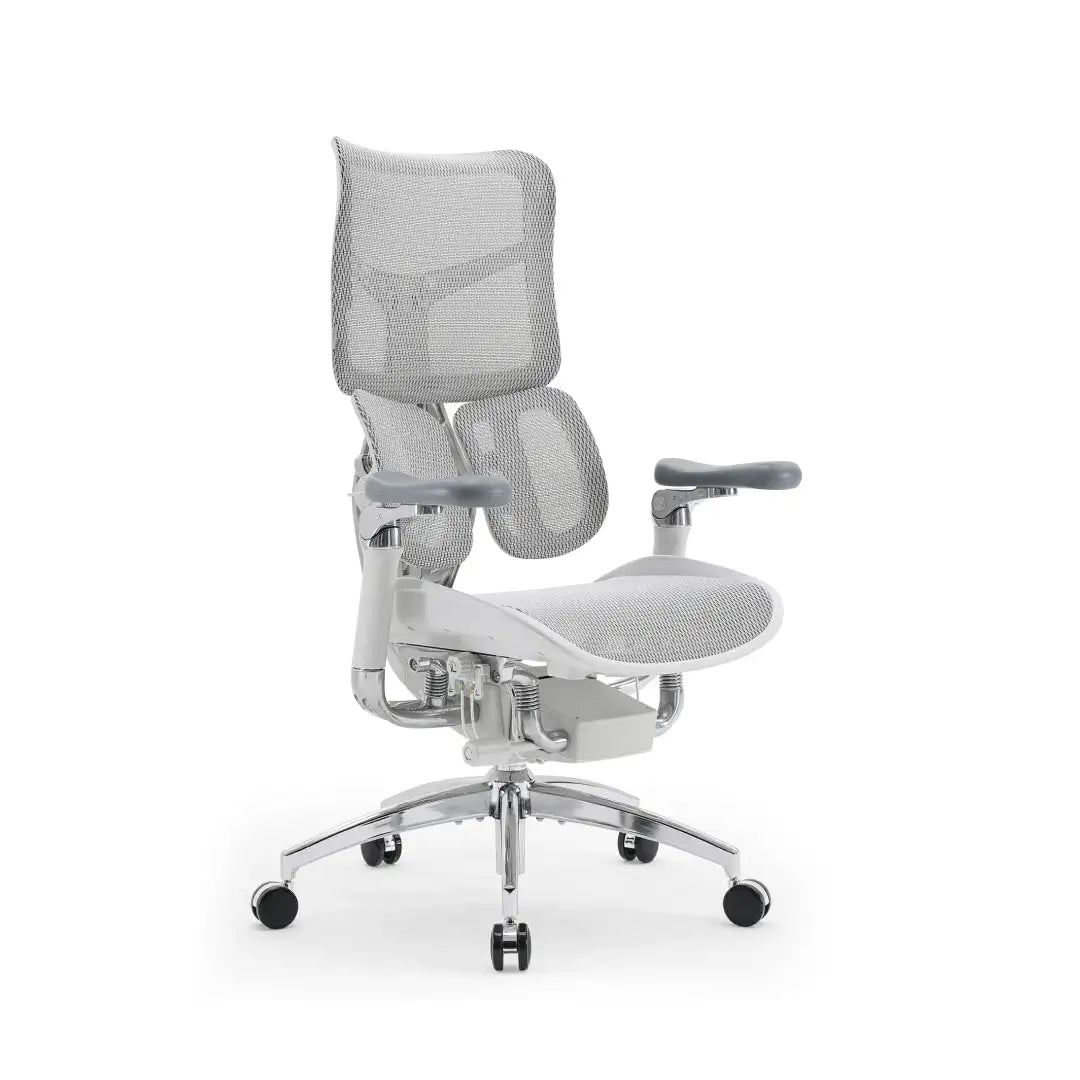
👉 CLICK HERE TO REPROGRAM YOUR WORKSPACE WITH THE ULTIMATE BREATHABLE SEATING UPGRADE.
Brushing Away the Ache: How My Studio Seating Saved My Posture and My Art
Acoustic Symmetry and Spinal Alignment: Tuning My Workspace for Peak Creative Flow
Ähnliche Beiträge

Acoustic Symmetry and Spinal Alignment: Tuning My Workspace for Peak Creative Flow

Brushing Away the Ache: How My Studio Seating Saved My Posture and My Art

Beyond the Blueprint: A Designer’s Guide to Seat Tension and Creative Endurance

Breaking the Slouch: A First-Person Chronicle of Lower Back Recovery and Creative Stamina

Beyond the Hype: What a Truly Adaptive Workspace Taught Me About Creative Burnout

The Inoculation Asset: Evaluating Corporate Seating Infrastructure Through the Lens of Liability Mitigation
