

The Physics of the 8-Hour Workday
The Hidden Strain of "Relaxing"
Most people think sitting is a form of rest. Biomechanically, it’s anything but. When you sit in a standard, poorly designed seat, your lumbar spine (the lower back) loses its natural inward curve. This "flattening" doubles the pressure on your intervertebral discs compared to standing. If you do this for years, your body doesn't just get tired—it adapts, often through pain and chronic inflammation.
To find the chair ergonomic office that actually works, you have to look beyond the "padding." You have to look at the Supportive Geometry.

The S-Curve: An External Spine
Our design philosophy centers on the S-Shaped Bionic Curve. We’ve engineered the backrest to act as an external skeletal support system.
-
The Lumbar Bridge: Instead of leaving a gap at your lower back, the high-tenacity mesh maintains a firm, elastic bridge that keeps your pelvis in a neutral position.
-
Responsive Tension: Unlike foam which stays compressed, our mesh reacts to your micro-movements. Every time you shift to type or reach for a coffee, this chair ergonomic office recalibrates the tension to keep your spine aligned.

115°: The Decompression Angle
We often talk about the 115-degree recline lock. This isn't just for comfort; it’s for metabolic health. At 115 degrees, the angle between your torso and thighs opens up. This posture reduces intra-discal pressure and allows for deeper diaphragmatic breathing—increasing the oxygen flow to your brain during high-stress tasks.
Built for the Long-Haul
Underneath the elegant, translucent white frame lies a foundation that meets the highest industrial standards. With a BIFMA-certified 330 lbs capacity and a Sliding Seat function, this is an investment in your physical longevity. It is hardware designed to outlast your longest projects.
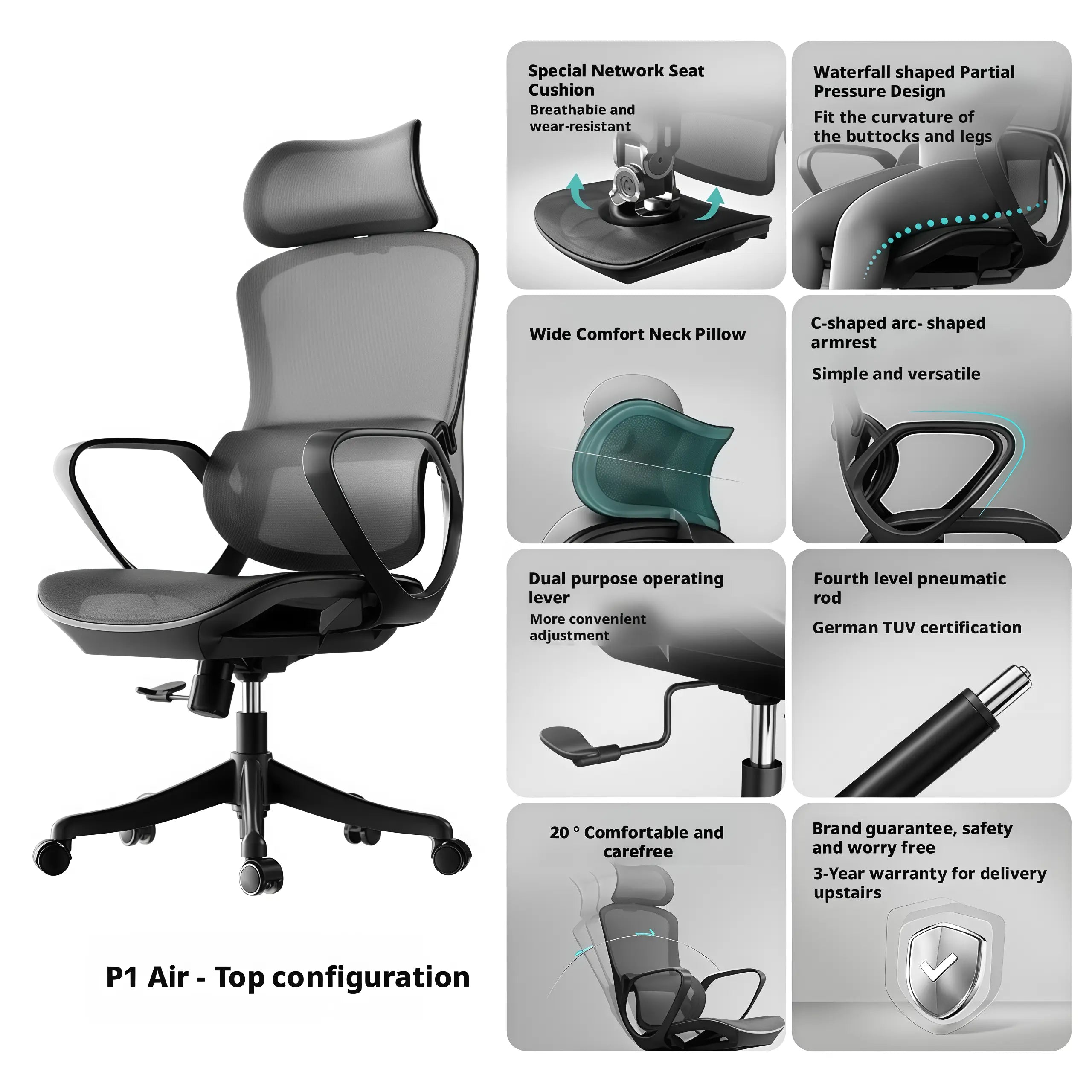
Protect Your Spine – Shop the Bionic Support Series
The Developer’s Guide to Vertebral Integrity
The Hidden Architecture of Academic Success
Related Posts

Acoustic Symmetry and Spinal Alignment: Tuning My Workspace for Peak Creative Flow

The Open-Source Posture: Solving the Hidden Thermal and Lumbar Glitches of WFH Seating

Brushing Away the Ache: How My Studio Seating Saved My Posture and My Art

Beyond the Blueprint: A Designer’s Guide to Seat Tension and Creative Endurance

Breaking the Slouch: A First-Person Chronicle of Lower Back Recovery and Creative Stamina

Beyond the Hype: What a Truly Adaptive Workspace Taught Me About Creative Burnout

The Inoculation Asset: Evaluating Corporate Seating Infrastructure Through the Lens of Liability Mitigation


