

Why "Ergonomic" Has Become a Buzzword
If you search for an ergonomics chair today, you’ll find thousands of options ranging from $50 to $1,000. Most of them look the same, but they perform vastly differently. After testing hundreds of units in our lab, we’ve identified that true spinal relief isn't about how many levers a chair has—it's about the geometry of the frame and the integrity of the materials.

1. The 115° Myth: Why More Isn't Always Better
Many brands brag about a 150-degree recline. But unless you plan on sleeping in your office, that’s a marketing gimmick. For high-focus work, the 115-degree recline is the gold standard. It’s the precise angle that opens the hip flexors and shifts weight onto the backrest while keeping your eyes perfectly aligned with your monitor. Our latest model locks at this "Focus-Rest" sweet spot, ensuring you don't lose your productive momentum during a quick stretch.

2. The Hidden Hero: Seat Depth (Sliding Function)
If a chair doesn't have a Sliding Seat, it isn't truly ergonomic. Why? Because ergonomics is the study of the individual. A fixed seat is a gamble. Our ergonomics chair features a sliding seat pan that allows you to customize the depth. This single feature prevents the chair from cutting off circulation to your lower legs, a common cause of workday fatigue that most people blame on "poor diet" or "lack of sleep."
3. The "Silent" Safety Check
We put our hardware through the ringer. This ergonomics chair is built on a Reinforced Nylon-Fiberglass Frame and carries a BIFMA-certified 330 lbs rating.
-
Class-3 Gas Lift: For smooth, explosion-proof height adjustments.
-
High-Tenacity Mesh: That won't sag after six months of use.
The Verdict
Don't buy a chair for its aesthetics alone. Buy it for the industrial standards that protect your skeletal system. When you strip away the hype, what remains is the science of support.
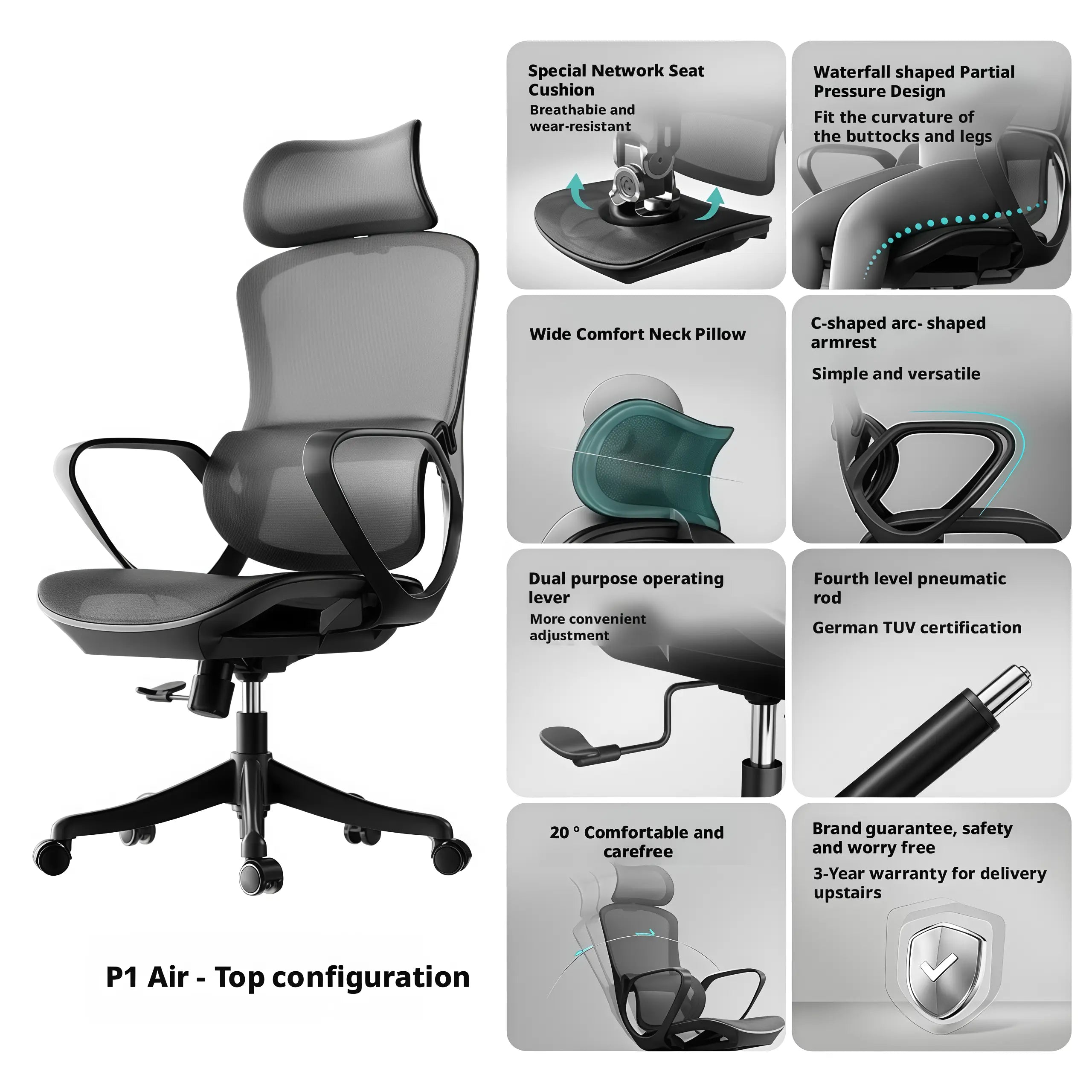
See the Lab Specs – Shop the 2026 Ergonomics Chair
Related Posts

Acoustic Symmetry and Spinal Alignment: Tuning My Workspace for Peak Creative Flow

The Open-Source Posture: Solving the Hidden Thermal and Lumbar Glitches of WFH Seating

Brushing Away the Ache: How My Studio Seating Saved My Posture and My Art

Beyond the Blueprint: A Designer’s Guide to Seat Tension and Creative Endurance

Breaking the Slouch: A First-Person Chronicle of Lower Back Recovery and Creative Stamina

Beyond the Hype: What a Truly Adaptive Workspace Taught Me About Creative Burnout

The Inoculation Asset: Evaluating Corporate Seating Infrastructure Through the Lens of Liability Mitigation


