

Confessions of a Creative Director: 5 Ergo Gaming Chair Red Flags That Destroyed My Spine (And How I Fixed It)
When you spend upwards of ten hours a day steering high-budget digital campaigns, your workspace configuration becomes your lifeline. As a creative director running a fast-paced studio, I learned the hard way that a standard seat simply cannot withstand the physical demands of long-term cognitive focus. For years, I fell into the trap of purchasing overhyped furniture marketed with flashy colors and racing-stripe aesthetics. I thought I was buying an elite ergo gaming chair, but instead, I was compounding severe spinal fatigue.
One morning, while finalizing a major brand pitch alongside my junior industrial designers, Elena and Marcus, a sharp, familiar ache flared up in my lumbar spine. We decided to audit our workspace furniture scientifically. If you are currently searching for a high-performing ergo gaming chair or an upgraded ergonomic desk chair to secure your spinal health, you must look past the aggressive marketing.

Red Flag #1: The Fixed, Non-Reactive Lumbar Block
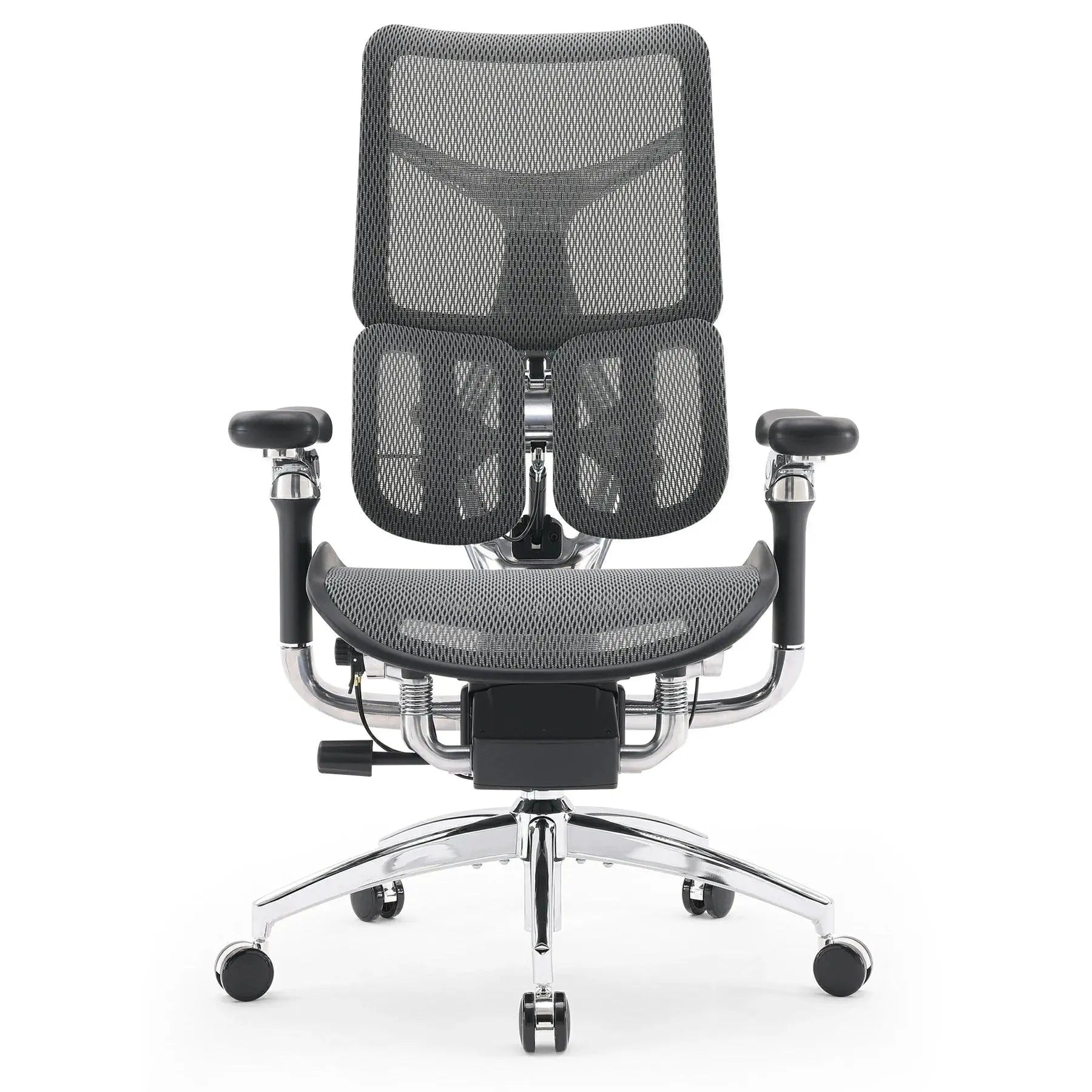
Many mass-market chairs boast an aggressive, non-adjustable plastic or foam bump meant to serve as lower back support. This is a massive trap. Human spines do not conform to a single static mold. A true, professionally designed ergo gaming chair must feature a dynamic, self-adjusting tension mesh that mimics your natural spinal curvature as you shift posture in real-time.
Red Flag #2: Racing-Style Bucket Seats with Restricted Shoulders
The popular "racing seat" visual DNA is inherently flawed for office productivity. Those flared wings on the sides force your shoulders forward into a permanent slouch, compressing your chest and restricting deep breathing. When Elena and I were mapping out storyboard timelines, I found myself constantly fighting the chair. Your workspace seating should encourage an open, confident posture.

Red Flag #3: Trapped Heat from Cheap PU Leather
If a chair relies heavily on thick synthetic leather covering dense, non-porous recycled foam, your body temperature will suffer. Within two hours of intense rendering sessions, the lack of thermal regulation creates localized heat traps. Upgrading to a premium, breathable material found in an advanced high-end minimalist ergonomic office chair completely solves this, keeping your core cool and your focus locked on the project at hand.
Red Flag #4: Lack of Synchronized Tilting Mechanics
Cheap workspace chairs often utilize a basic center-tilt mechanism where the backrest and the seat pan tilt backward at the exact same angle. This lifts your thighs off the ground, cuts off circulation behind your knees, and forces your neck into an awkward forward crane. When I recline to review large print proofs, I require a sophisticated weight-activated synchronous tilt.

Red Flag #5: Rigid, Low-Articulating Armrests
Your arms make up roughly 10% of your total body weight. When armrests cannot pivot inward or adjust in height to match your desk surface perfectly, that weight is transferred directly to your trapezius muscles and neck.
The Turning Point: Absolute Orthopedic Alignment
The turning point for our design headquarters arrived when we cleared out the racing buckets. Transitioning to a truly responsive high-end minimalist ergonomic office chair completely transformed our workflow. The floating suspension, multi-dimensional arm tracking, and targeted independent lumbar control mean that whether I am leaning forward to inspect a pixel texture or deeply reclining during a long conference call, the chair actively neutralizes gravitational compression.
Quantum Response Vectors: Shielding the Spine with an Advanced Ergonomic Gaming Chair
Redesigning the Tech Executive: Why Silicon Valley's 'Best Gaming Chair' Left My Engineering Team in Chronic Pain
Related Posts

Acoustic Symmetry and Spinal Alignment: Tuning My Workspace for Peak Creative Flow

The Open-Source Posture: Solving the Hidden Thermal and Lumbar Glitches of WFH Seating

Brushing Away the Ache: How My Studio Seating Saved My Posture and My Art

Beyond the Blueprint: A Designer’s Guide to Seat Tension and Creative Endurance

Breaking the Slouch: A First-Person Chronicle of Lower Back Recovery and Creative Stamina

Beyond the Hype: What a Truly Adaptive Workspace Taught Me About Creative Burnout

The Inoculation Asset: Evaluating Corporate Seating Infrastructure Through the Lens of Liability Mitigation
