

Debugging Your Posture: The Developer’s Case for a Professional Ergonomic Chair
In software development, we obsess over optimization. We refactor code to save milliseconds and upgrade servers to handle high loads. Yet, many of us ignore the most critical piece of "hardware" in our stack: our bodies. If you’re coding on a standard kitchen chair or a soft, unsupportive sofa, you’re essentially running your system on a massive "Technical Debt." That debt is paid in back pain, neck strain, and a shrinking career lifespan. This is why a specialized ergonomic chair is a mandatory upgrade for any serious developer.

Physical Layer Load Balancing Sitting still for eight hours creates a "static load" on your spine. Without the S-curve lumbar bridge found in a high-quality ergonomic chair, your lower back muscles are constantly firing just to keep you upright. This leads to muscle fatigue and eventually "The Slouch"—a position that compresses your spinal discs and restricts breathing. An ergonomic chair acts as an external skeleton, absorbing that load so your muscles can stay relaxed and your brain can stay focused on the logic on the screen.

Optimizing the Interface The 3D armrests are perhaps the most underrated feature for programmers. By adjusting the height and angle, you can ensure your elbows are at 90 degrees and your wrists are perfectly neutral. This eliminates the "shoulder shrugging" that leads to those nasty tension headaches at the end of the day. If you want to sustain a 20-year career in tech, stop looking at chairs as furniture and start seeing them as your most vital tool. An ergonomic chair is the preventive maintenance your body deserves.
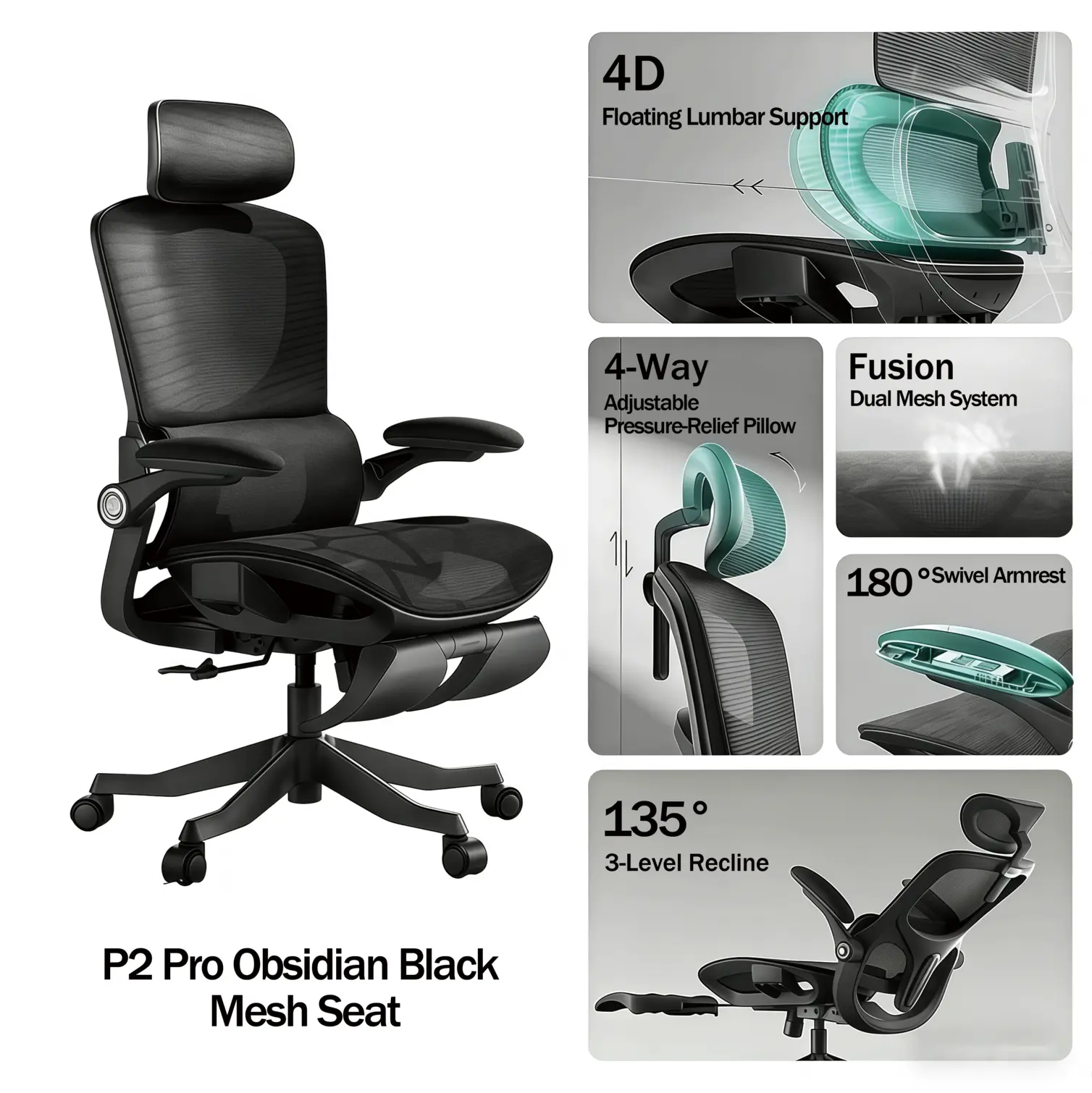
Upgrade your workstation architecture here: The Developer’s Ergonomic Chair Collection.
Beyond the Coffee Shop: Why I Finally Settled for an Ergo Chair
The Orthopedic ROI: Why Standardizing Our Office with Ergonomic Chairs Was My Best Management Move
Related Posts

Acoustic Symmetry and Spinal Alignment: Tuning My Workspace for Peak Creative Flow

The Open-Source Posture: Solving the Hidden Thermal and Lumbar Glitches of WFH Seating

Brushing Away the Ache: How My Studio Seating Saved My Posture and My Art

Beyond the Blueprint: A Designer’s Guide to Seat Tension and Creative Endurance

Breaking the Slouch: A First-Person Chronicle of Lower Back Recovery and Creative Stamina

Beyond the Hype: What a Truly Adaptive Workspace Taught Me About Creative Burnout

The Inoculation Asset: Evaluating Corporate Seating Infrastructure Through the Lens of Liability Mitigation
